Project
Machines With Human-Like Memory
A PhD research project on explicit memory architectures for AI, spanning benchmarks, handcrafted agents, learned policies, and temporal knowledge-graph memory.
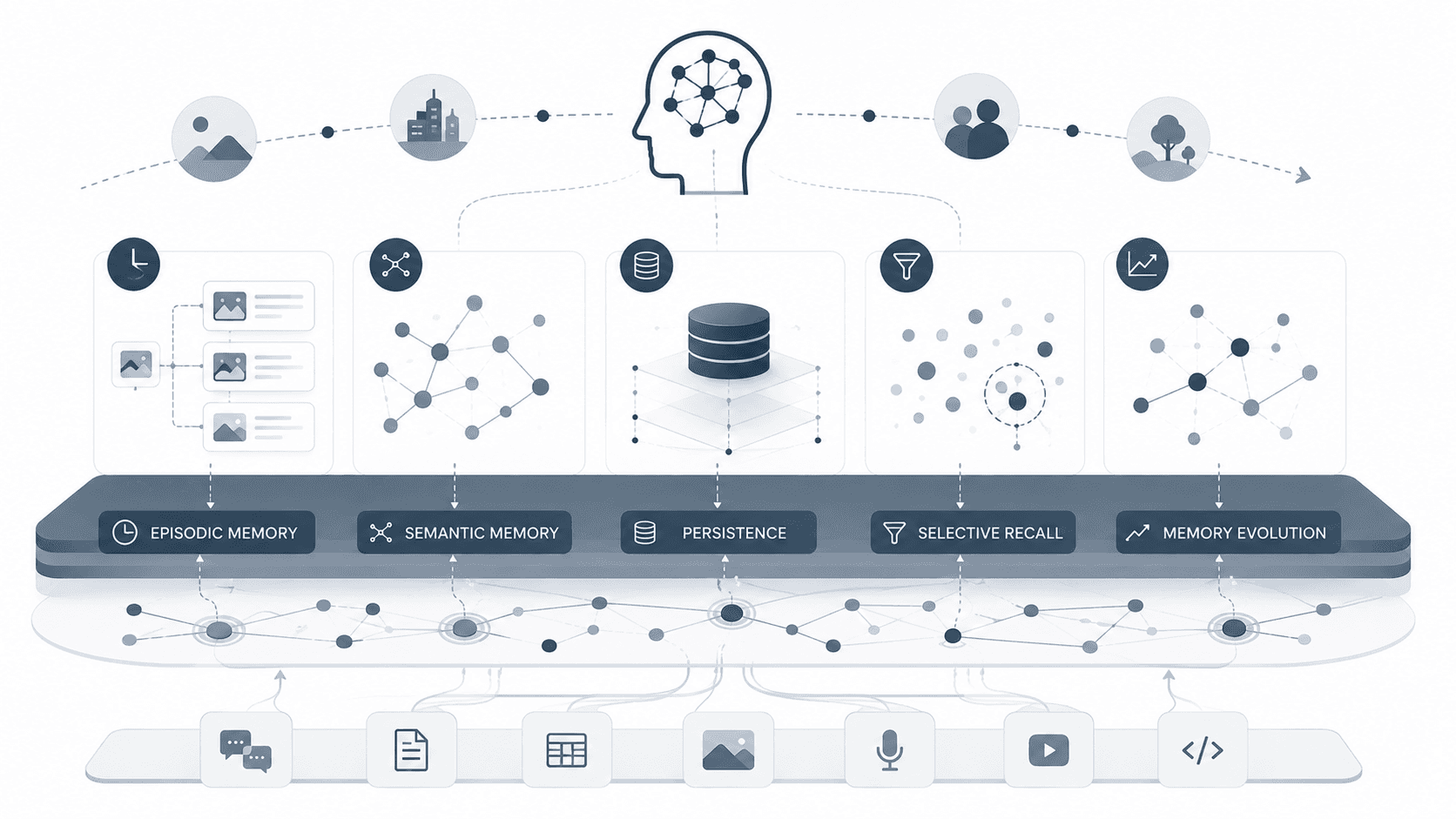
Why it exists
Memory should be a first-class AI architecture problem.
Most AI systems still treat memory as an afterthought: short-lived context windows, opaque hidden state, or retrieval layers that struggle to represent what should persist, what should fade, and how past experience should shape later behavior. That makes it difficult to study memory itself as an architecture rather than a side effect of prompting or scale.
What it is building
A research line from benchmark environments to explicit memory systems.
Machines With Human-Like Memory investigates AI memory architectures through successive concrete systems: benchmark environments, heuristic agents, reinforcement-learning agents with explicit memory systems, and later temporal knowledge-graph approaches. Together, those projects turn memory into something that can be modeled, compared, and improved directly rather than left implicit inside a model.
This project forms the research base behind several later HumemAI efforts. It connects long-term questions about memory architecture to practical systems work and product direction, and it creates a coherent line of work rather than a set of disconnected papers.
Project structure
Subprojects.
Browse the systems, papers, and implementations that make up this project line.
RoomKG Meta-Policies
A neuro-symbolic meta-policy that learns which symbolic memory heuristic to apply for answering, exploring, and forgetting, while keeping execution symbolic. Accepted at ISWC 2026.
Learn more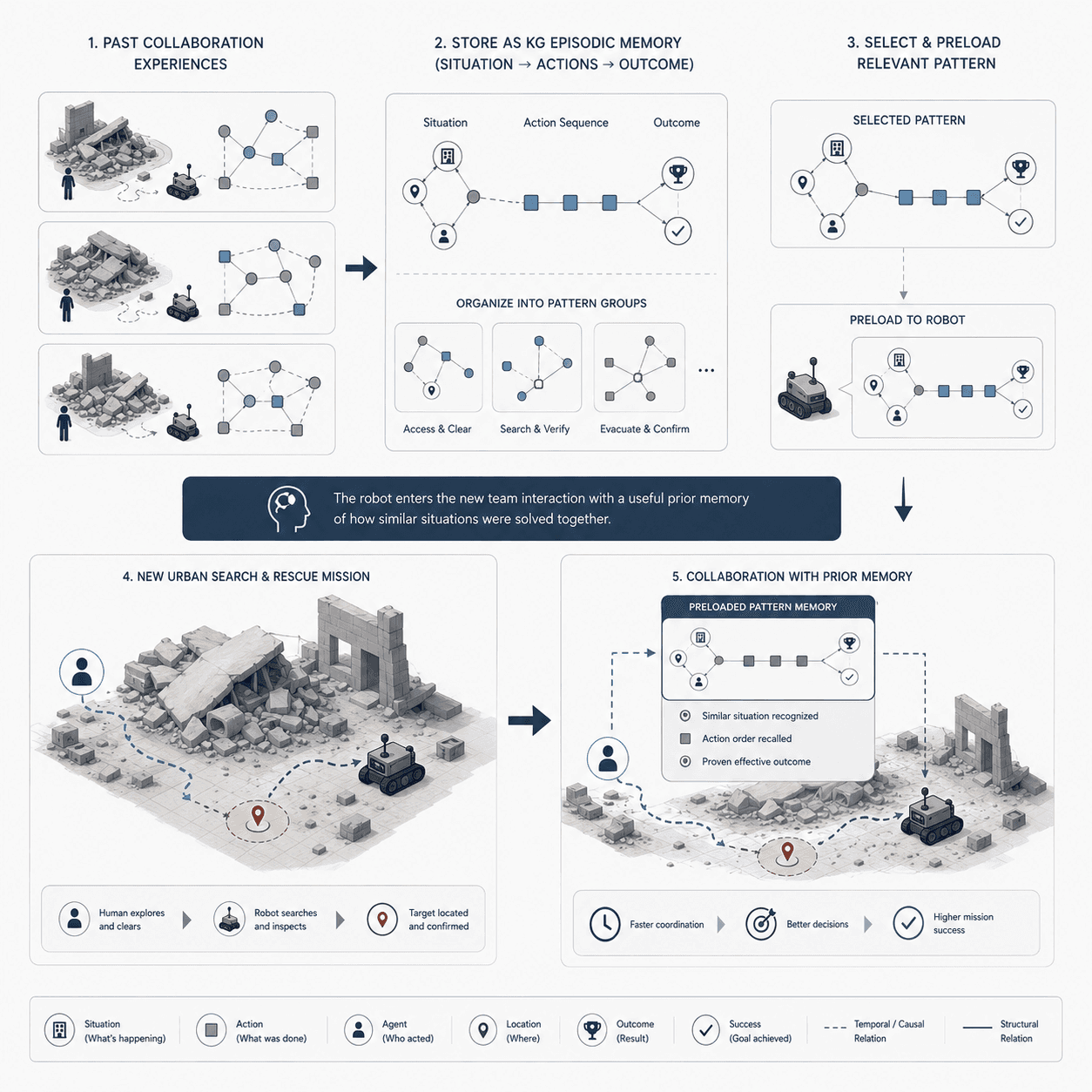
Co-Learning
Reusing prior human-robot collaboration patterns as knowledge-graph episodic memory to improve early teamwork in USAR.
Learn more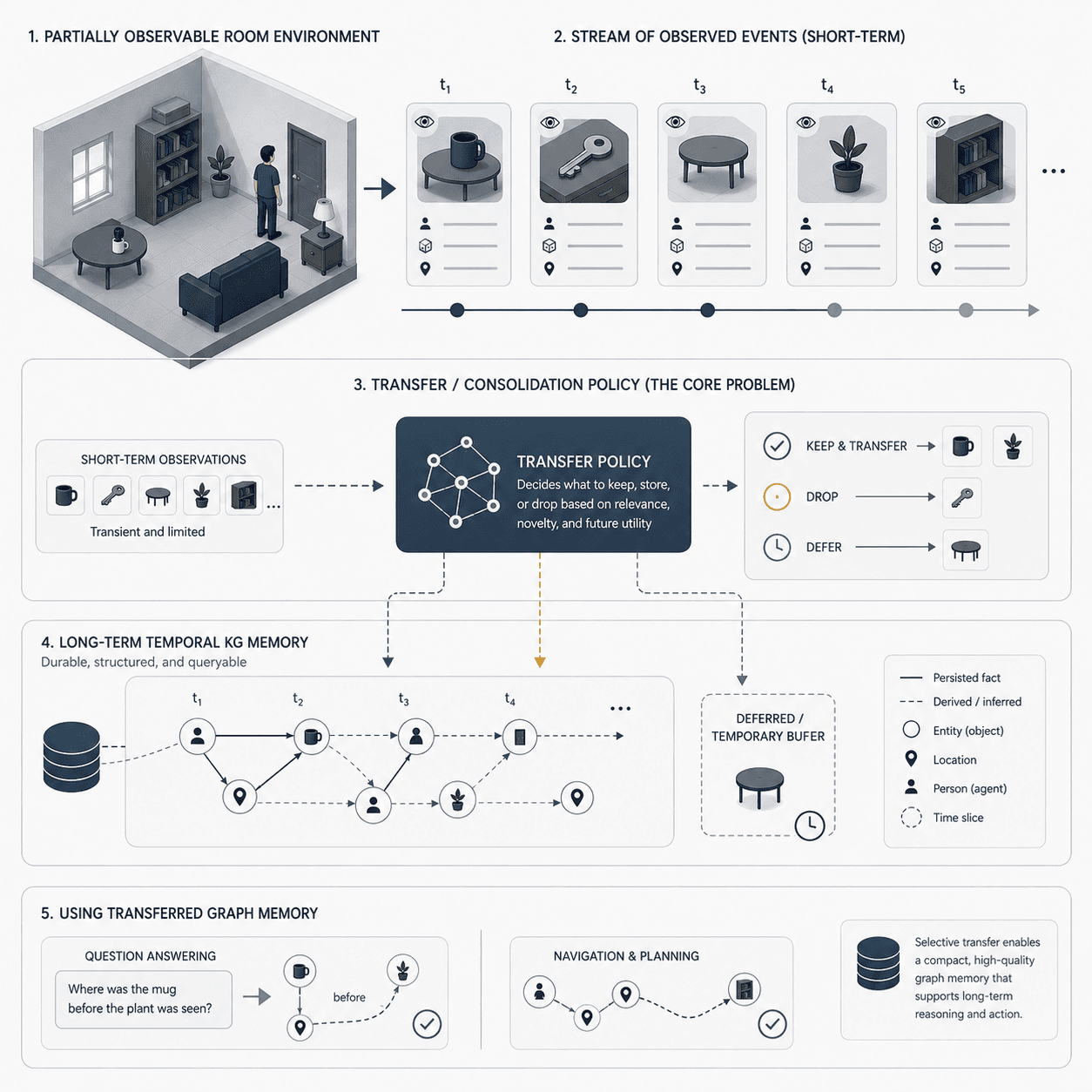
KG Memory Transfer
A learned keep-drop transfer policy for long-term knowledge-graph memory under partial observability.
Learn more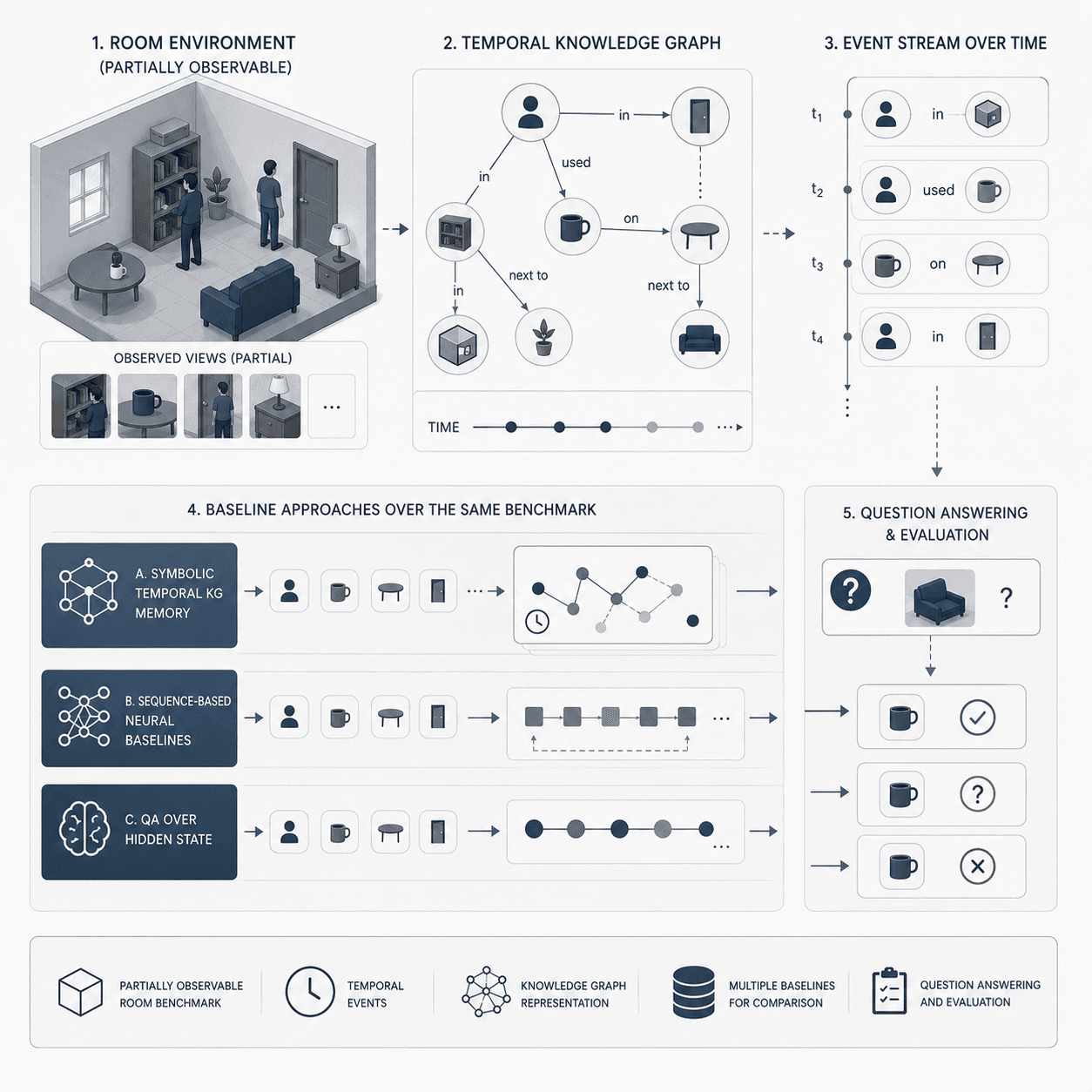
RoomKG Baselines
A neurosymbolic benchmark for temporal knowledge-graph memory under partial observability.
Learn more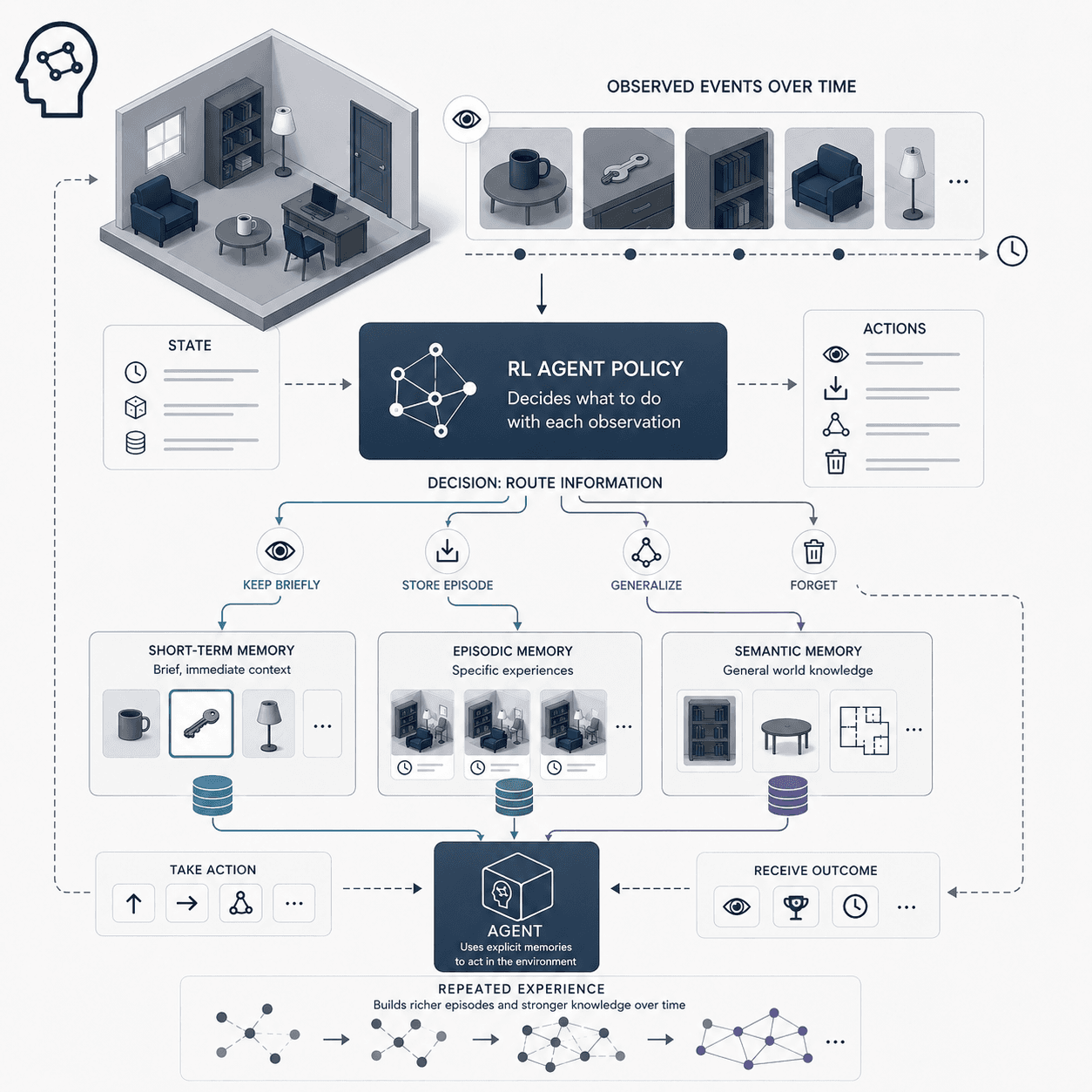
Explicit Memory
A reinforcement-learning agent with explicit short-term, episodic, and semantic memory in RoomEnv-v1.
Learn more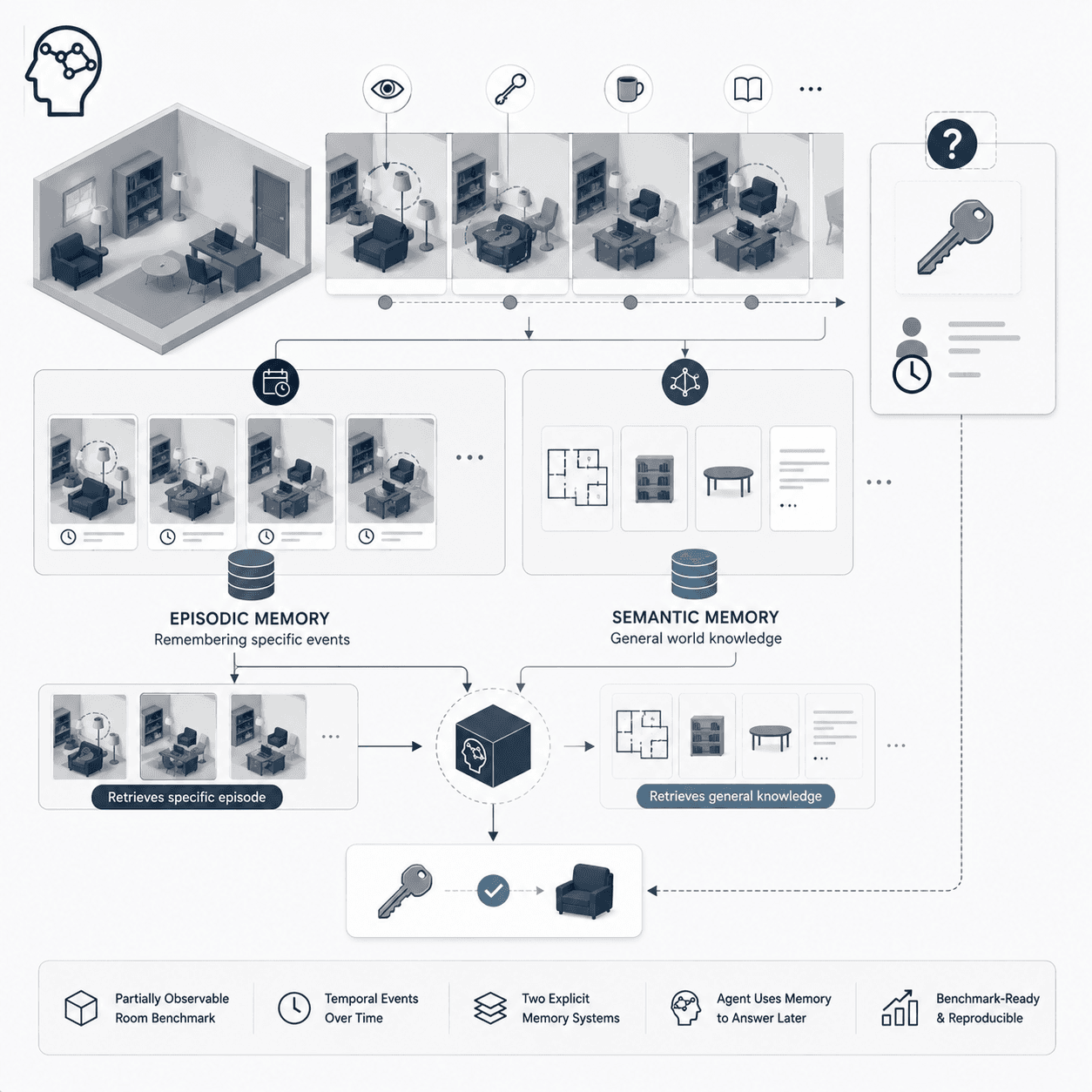
Human-Like Memory Systems
A paper and codebase introducing RoomEnv-v0 and heuristic agents with explicit episodic and semantic memory.
Learn moreAcknowledgements
Research support from Hybrid Intelligence.
This research was partially funded by the Hybrid Intelligence Center, a 10-year program funded by the Dutch Ministry of Education, Culture and Science through the Netherlands Organisation for Scientific Research (NWO). Learn more at Hybrid Intelligence .