Software
Audit-Ready Memory
A public-interest project building local-first, inspectable memory infrastructure for AI systems that need audit trails, deterministic replay, and explicit deletion.
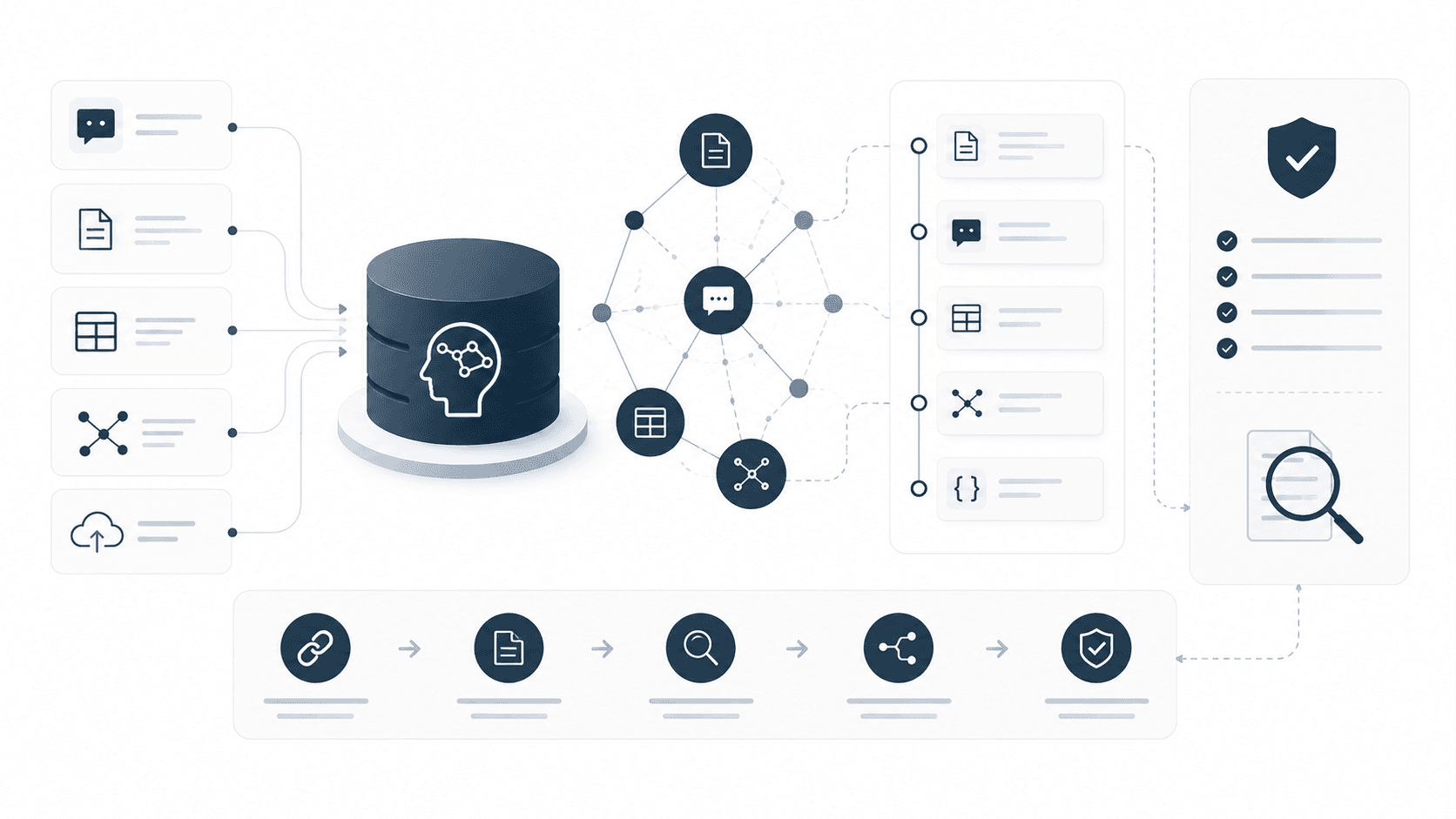
Auditability
AI memory needs explicit audit trails instead of opaque retention.
Figure 1
Audit-first memory model
- Inspectable retained memory records
- Traceable system behavior over time
- Explicit operational governance surface
- Local-first visibility instead of opaque hosted state
Many AI systems still handle memory in opaque model state or hosted tooling that was not designed for public-interest accountability. That makes it difficult to inspect what the system retained, understand why it behaved a certain way, or explain how a past decision was produced.
Audit-Ready Memory starts from the idea that memory is infrastructure, not a capability claim. Teams that need governance, inspection, and operational trust need a memory layer that exposes those properties directly.
Replay
Deterministic replay should make past behavior reconstructable.
Figure 2
Replay path
- Recorded memory events
- Deterministic reconstruction path
- Inspection of system decisions
- Verification beyond best-effort logging
One of the practical problems in accountable AI systems is that teams often cannot reconstruct why the system behaved a certain way after the fact. Logs may be partial, state may be implicit, and the memory path may be impossible to replay cleanly.
This project treats deterministic replay as a first-class requirement. In the implementation, replay is a pure fold over an append-only log, so the same history always produces the same state and any earlier point can be reconstructed exactly. Every read is recorded as its own event alongside the writes, which means the log can answer what a model was shown rather than only what was stored.
Deletion
Deletion must be explicit, meaningful, and operationally real.
Figure 3
Retention and removal controls
- Retention that can be inspected
- Deletion workflows that can be triggered
- Reviewable lifecycle controls
- Operational governance over memory state
Public-interest deployments cannot treat deletion as a weak promise while memory is spread across hidden stores, opaque agent state, or hard-to-audit infrastructure. If a system claims to remember, it also has to support explicit deletion and verifiable removal workflows.
Audit-Ready Memory therefore pairs traceability with deletion. Deleting appends a tombstone that names its targets and requires a reason, and deleted content is excluded from every read path, so it cannot re-enter a model's context. The removal is itself part of the record, which is what makes it possible to show that something was taken out and why. The documentation states plainly where this stops: content is hidden from reads but retained in the log, so hard erasure needs a deployment-level strategy.
Public interest
Build accountable memory infrastructure for civic and public-interest use.
Figure 4
Deployment orientation
- Civic-tech and NGO deployments
- Research and public-interest pilots
- Local-first inspectable infrastructure
- Reusable building block for trustworthy AI memory
The project is aimed at civic-tech teams, NGOs, researchers, and public-interest pilots that need more sovereign and explainable AI behavior. By keeping the memory layer local-first and openly documented, the work becomes reusable infrastructure rather than a closed operational dependency.
We built it as its own project because auditability, replay, and deletion are the core of the design.
Resources
Links and code.
Acknowledgements
Project support.

Audit-Ready Memory is funded by SIDN Fund as a public-interest effort to make AI memory infrastructure more inspectable, accountable, and practical to govern.