Research
Research on AI memory and databases.
It started with machines that have human-like memory, built with AI and knowledge graphs. It now covers databases too, multi-model ones in particular, and the benchmarks that compare them. The papers, code, and data are all public.

Research
Papers and benchmarks.
ArcadeDB
ArcadeDB keeps documents, graphs, vectors and time series in one engine, with one transaction across all four. Its benchmarks are in MMDBBench, with every setting public.

MMDBBench
An open benchmark of multi-model databases: one engine for tables, time series, documents, graphs, key-values, and vectors, with specialist databases as baselines.

ArcadeDB in Python
One embedded database for documents, a graph and vectors, running inside the Python process. How it works, how it compares with the specialists, and what it costs.
RoomKG Meta-Policies
A neuro-symbolic meta-policy that learns which symbolic memory heuristic to apply for answering, exploring, and forgetting, while keeping execution symbolic.
KG Memory Transfer
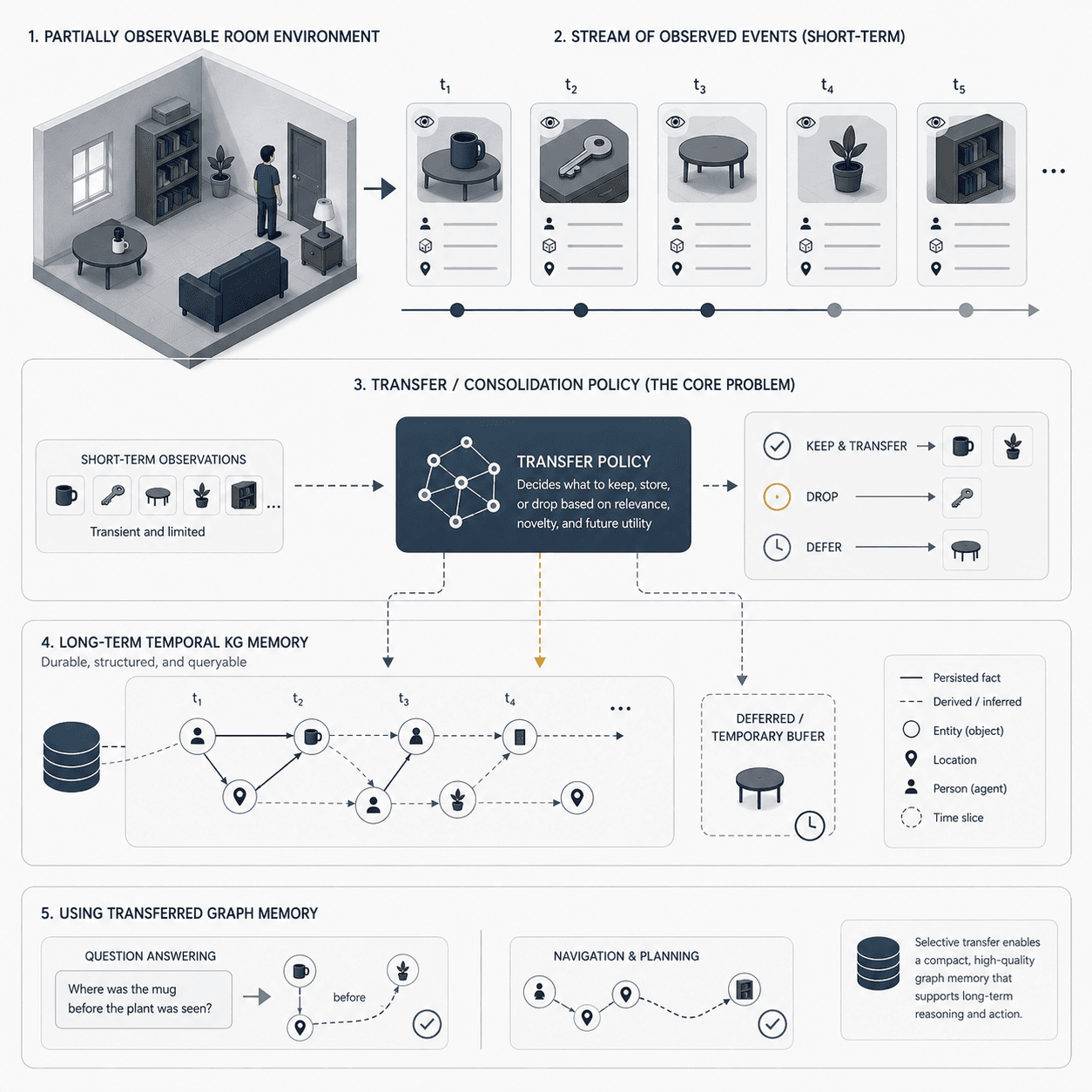
A learned policy that decides which short-term memories to keep in long-term knowledge-graph memory, for an agent that only sees part of its world.
RoomKG Baselines
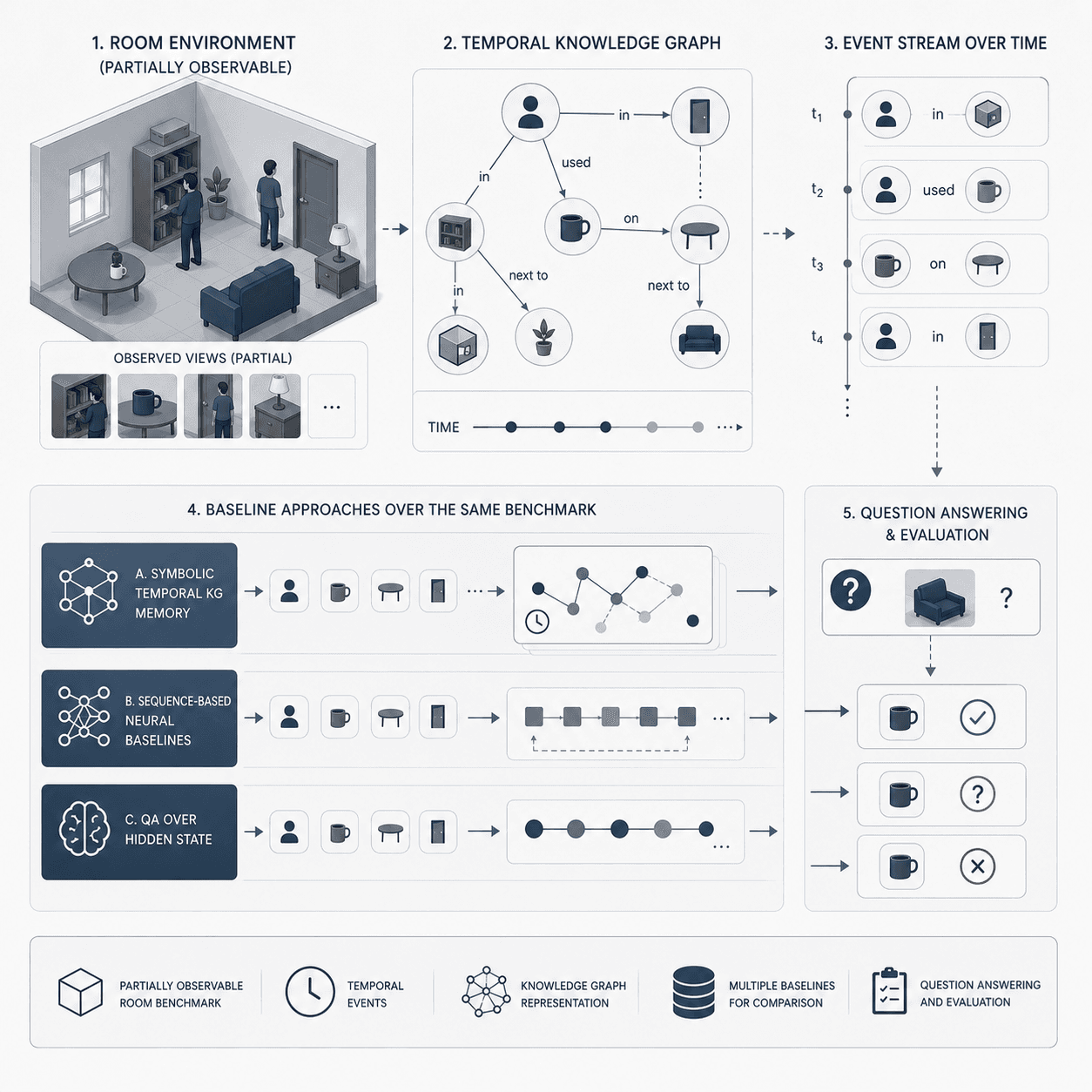
A benchmark for temporal knowledge-graph memory when the agent only sees part of its world, with symbolic and neural baselines to compare against.
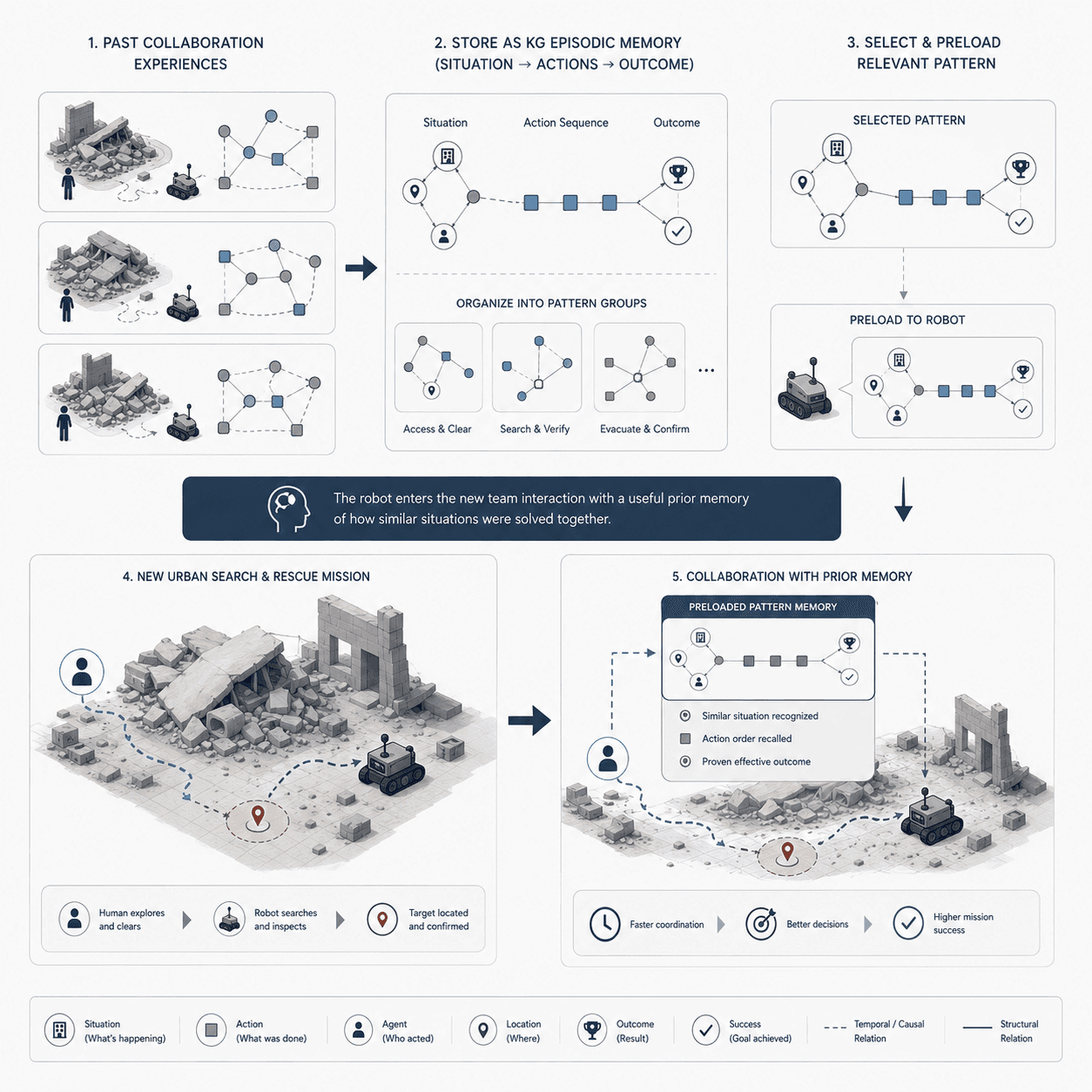
Co-Learning
A robot that starts a search-and-rescue mission with a knowledge-graph memory of earlier collaborations, so teamwork with a human improves from the start.
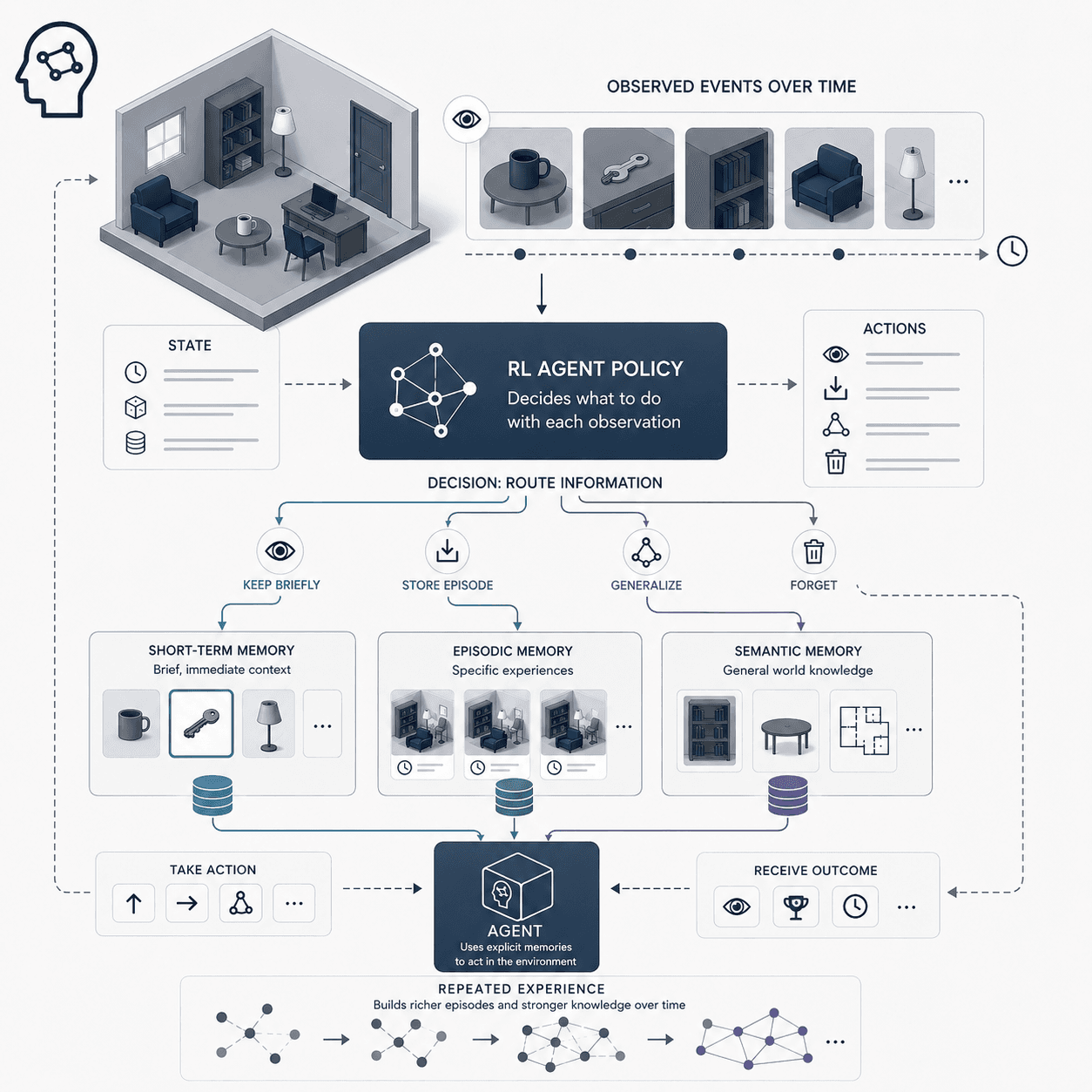
Explicit Memory
A reinforcement-learning agent that learns how to store its short-term, episodic and semantic memories, instead of following a hand-written policy.
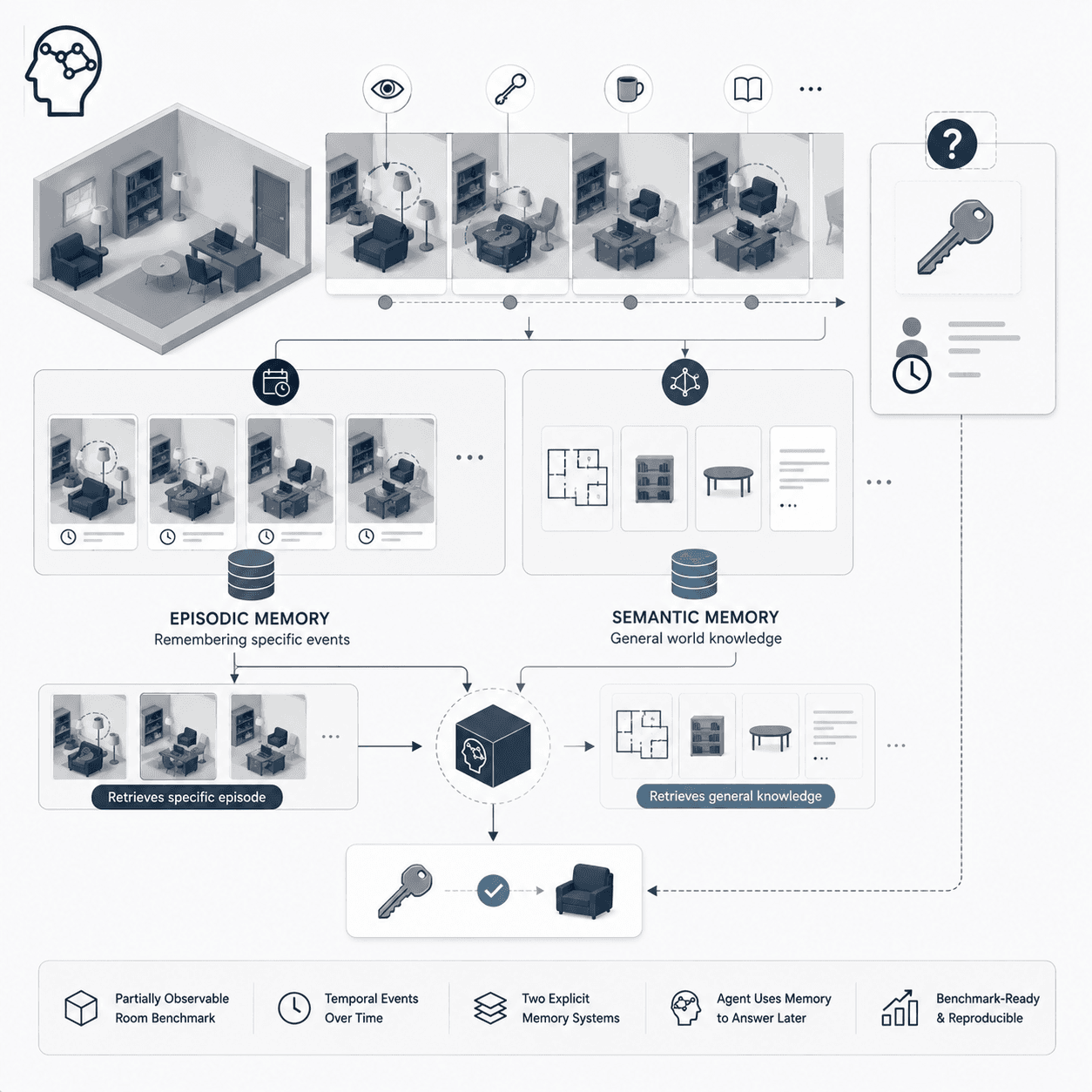
Human-Like Memory Systems
RoomEnv-v0 and heuristic agents with explicit episodic and semantic memory: the first benchmark and codebase in our line of memory research.
Contribute
Reproduce it, or work on it with us.
The papers, code, and data behind each result are public. Open an issue when you find a mistake, or reproduce a result on your own hardware and tell us what you measured.
Research collaborations are welcome, on memory for agents, knowledge graphs, or databases.