Project
Multi-Model Databases
A systems project exploring how tables (SQL), graphs (Cypher), and semantic vector search (ANN search) can coexist in one developer experience without pretending one engine should do every job.
Why it exists
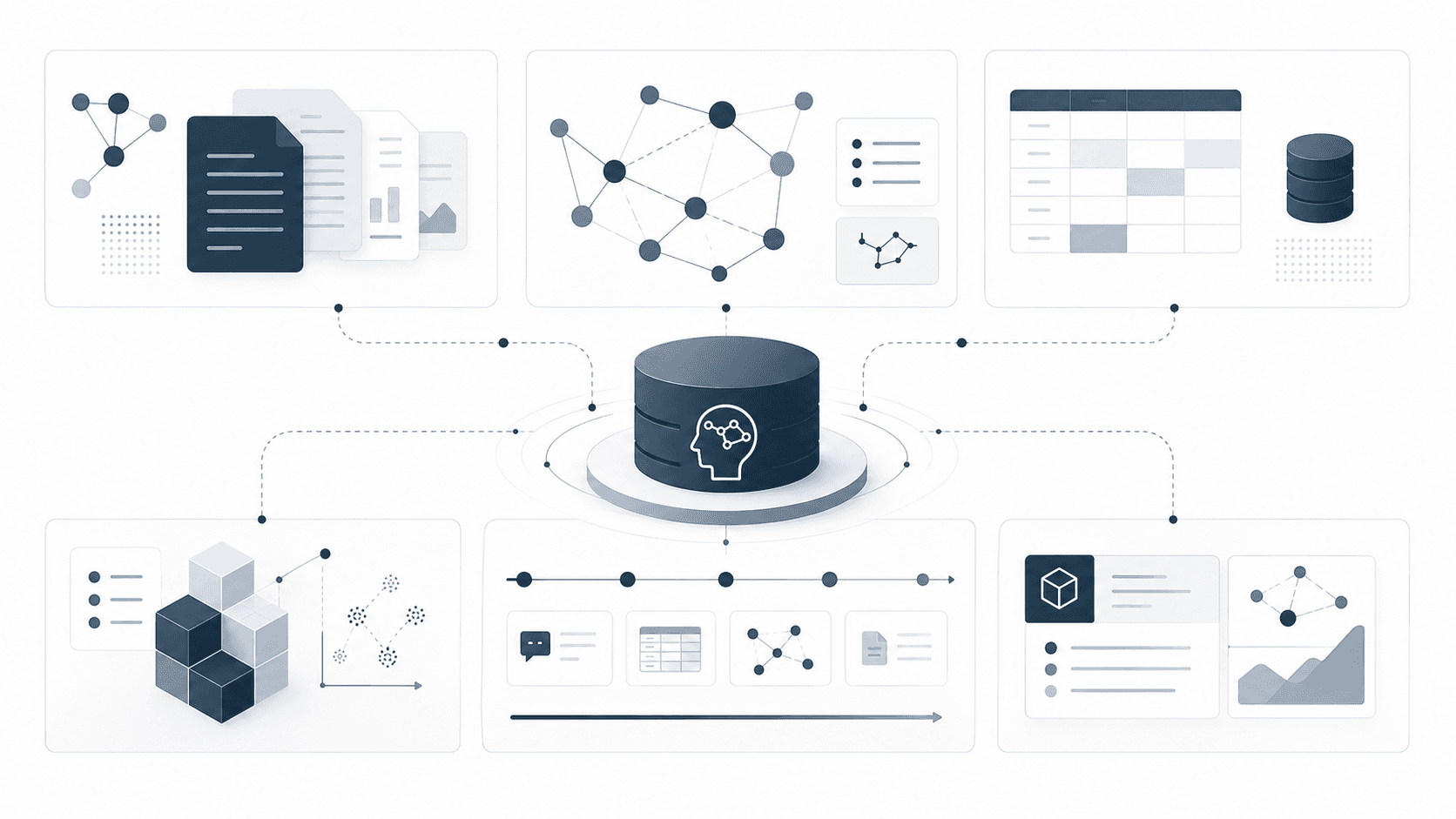
AI applications span table, graph, and vector workloads.
AI systems increasingly need relational queries, graph structure, and vector search in the same application, but most products collapse those differences behind one platform story. That usually hides which engine is responsible for what, makes routing and debugging harder, and turns local development into a weaker version of a hosted stack instead of a first-class environment.
What it is building
Connecting multiple engines without pretending they are one.
Multi-Model Databases is HumemAI's broader systems project on explicit multi-engine architecture. It brings together runtime work, query compilation, embedded bindings, and orchestration so developers can combine data models while still seeing the real boundaries between table, graph, and vector execution.
This project forms the infrastructure layer behind HumemAI's database direction. It connects the pieces that make a more honest multi-model stack possible, from embedded Python bindings and Cypher compilation to a runtime that coordinates the engines instead of pretending they are all the same system.
Project structure
Subprojects.
Browse the systems, papers, and implementations that make up this project line.
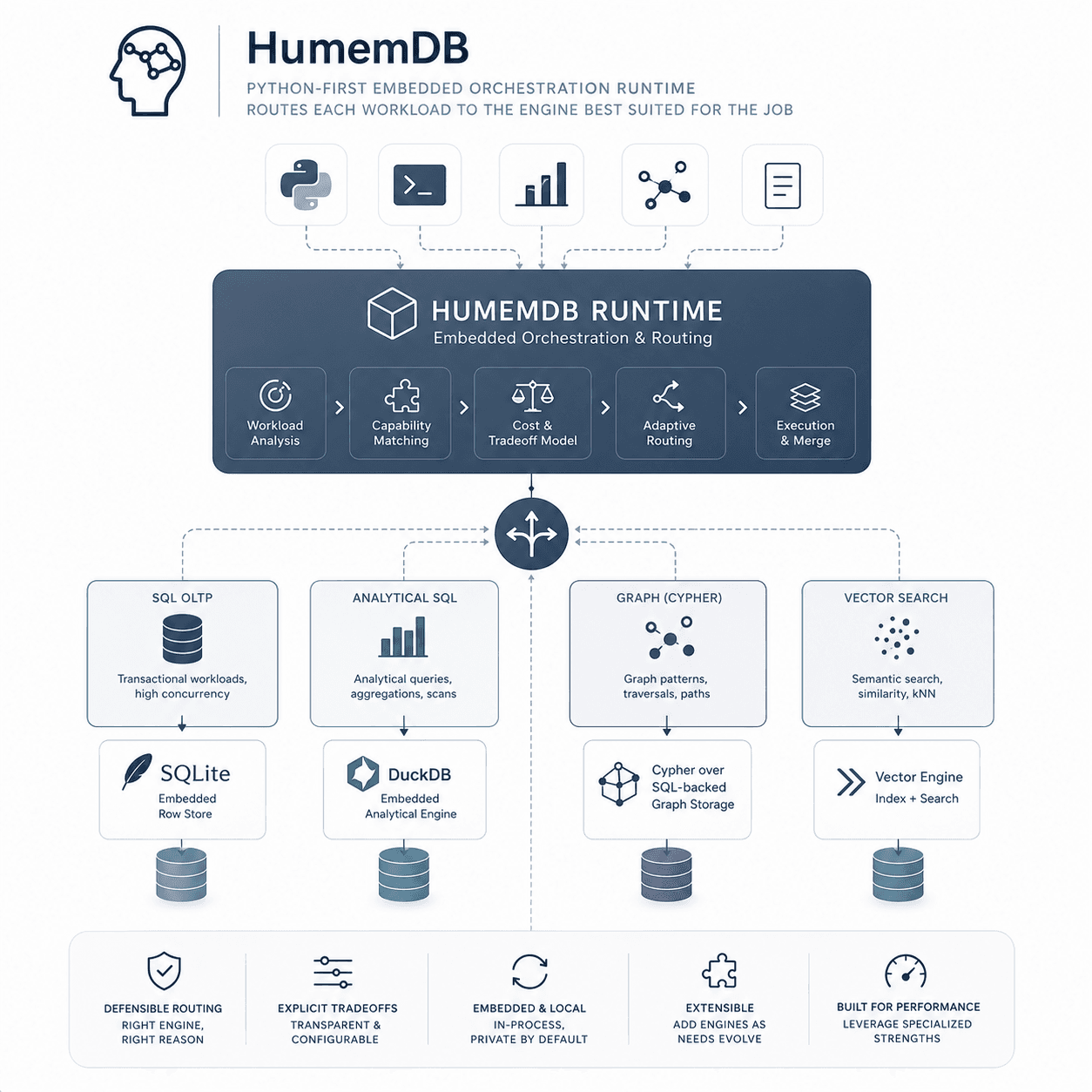
HumemDB
A Python orchestration layer that combines SQLite, DuckDB, CypherGLOT, and LanceDB so table, graph, and vector workloads can be routed across embedded engines without forcing one database to do every job.
Learn more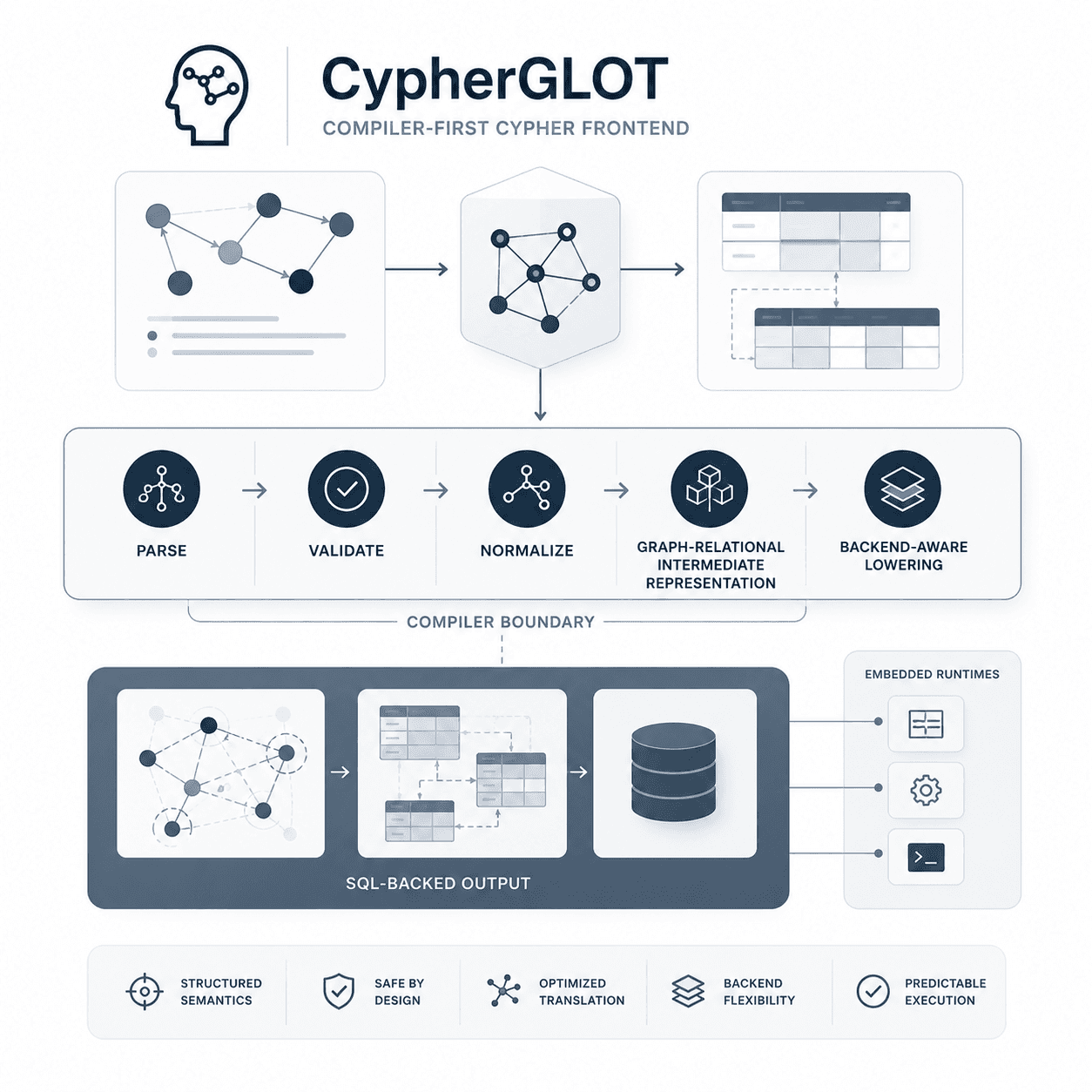
CypherGLOT
A Cypher-to-SQL compiler that lets developers think in graph terms, then lowers admitted Cypher through an internal AST and IR into backend-aware SQL for host runtimes.
Learn more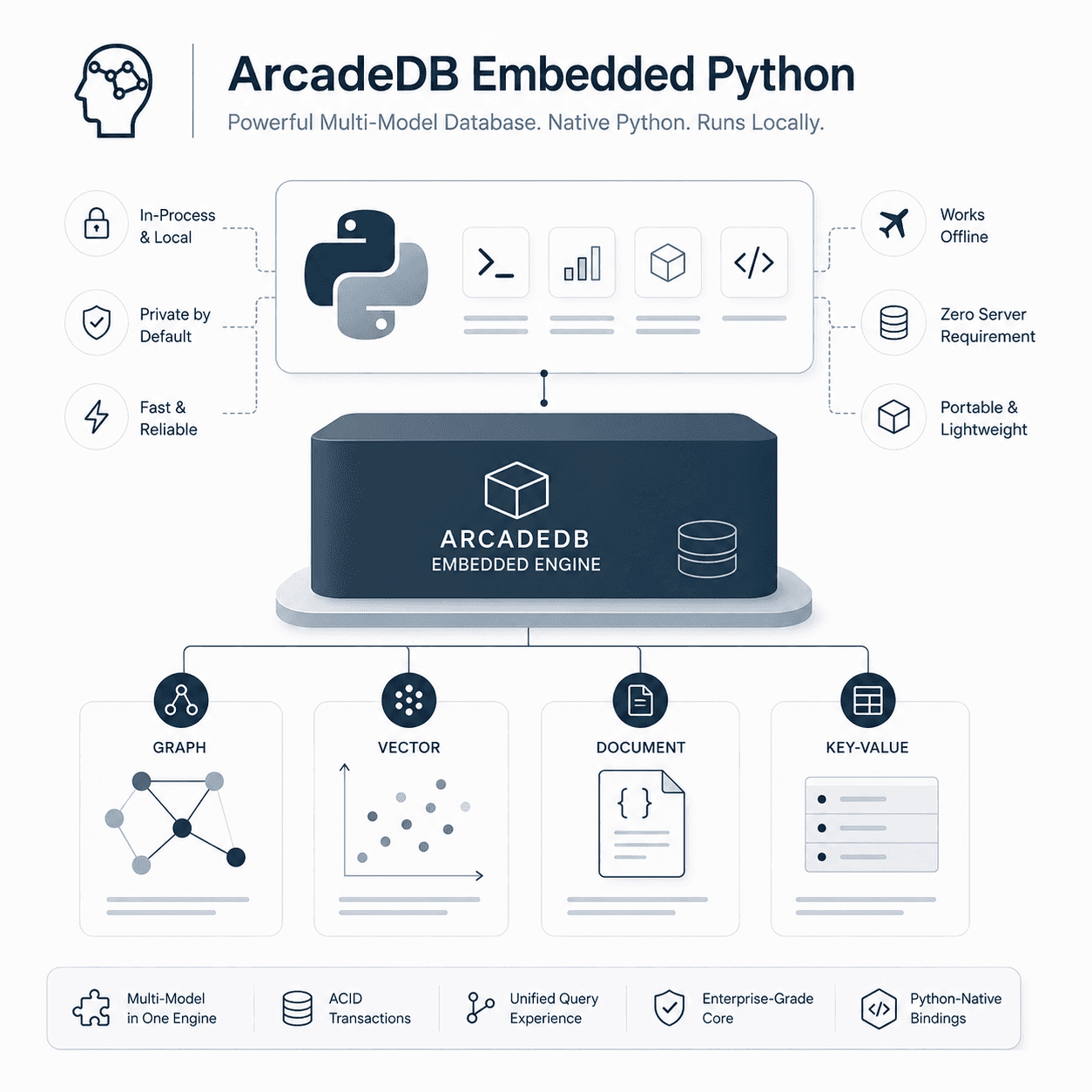
ArcadeDB
A multi-model database engine that keeps documents, graphs, vectors, and time series in one transactional engine, plus the Python package that runs that engine inside your process, benchmarked against the comparators in each category.
Learn more