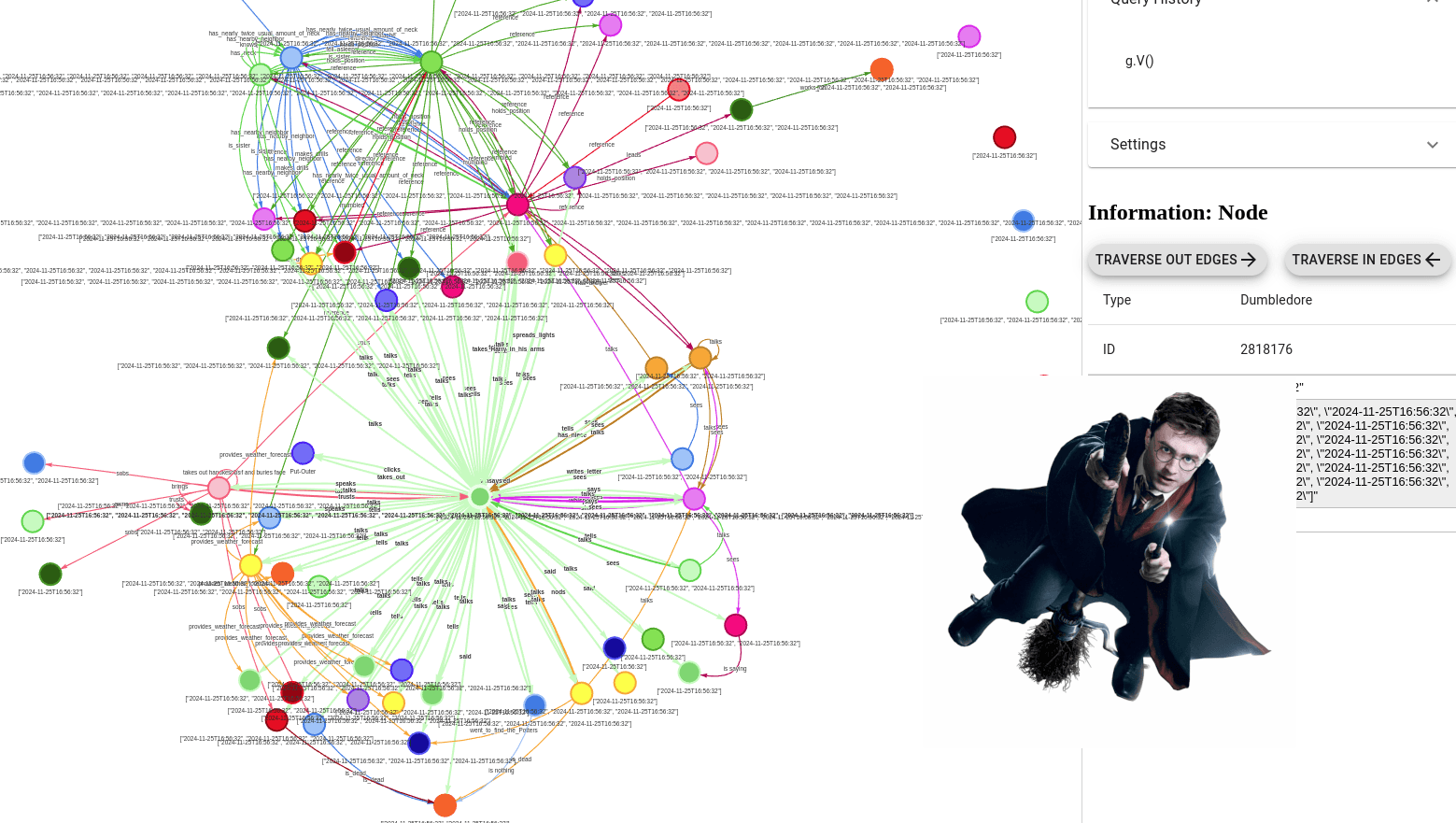
A new PromptAgent demo
We are publishing a new PromptAgent demo that shows two complementary workflows: text-to-graph, where an LLM extracts structured knowledge from text, and graph-to-text, where the system turns structured graph data back into readable language. This is the kind of interface layer we care about because it makes graph-native memory systems easier to inspect and easier to use.
What the demo shows
PromptAgent is built on top of the open-source HumemAI Python package. In the demo, we show how prompting can be used to extract relationships from text, serialize graph structure for an LLM, and convert structured output back into a useful textual representation.
The implementation uses property-graph infrastructure and keeps the graph as a first-class object rather than reducing everything to unstructured text. That matters to HumemAI because it keeps retrieval, inspection, and long-term memory organization more explicit.
Why this workflow matters to us
We see PromptAgent as a useful bridge between language-native interfaces and graph-native memory systems. LLMs are very good at working with text, while memory-heavy systems often need explicit structure for retrieval and reasoning. This demo explores how to connect those two surfaces without pretending they are the same thing.
It also points toward a broader direction for HumemAI: tools that can move fluidly between text, knowledge graphs, and memory-oriented agent workflows.
What comes next
HumemAI will keep sharing demos and project updates as this line of work matures. If you want the broader technical context around graph-based memory and agent systems, browse the project pages, where we collect the longer-form work behind these announcements.
Resources