Our Co-Learning paper has been accepted at RO-MAN 2026
We are announcing that Improving Human-Robot Teamwork in Urban Search and Rescue Through Episodic Memory of Prior Collaboration has been accepted at RO-MAN 2026, the 35th IEEE International Conference on Robot and Human Interactive Communication, held in Fukuoka, Japan.
The work was carried out in collaboration with TNO and TU Delft, and is now part of the broader Co-Learning project page, where we explain the method, results, and experimental setup in more detail.
What the paper is about
This work studies a specific memory problem in human-robot teamwork: when a robot joins a new collaboration, can it reuse prior team experience to be a better teammate from the very start, instead of beginning with an empty memory?
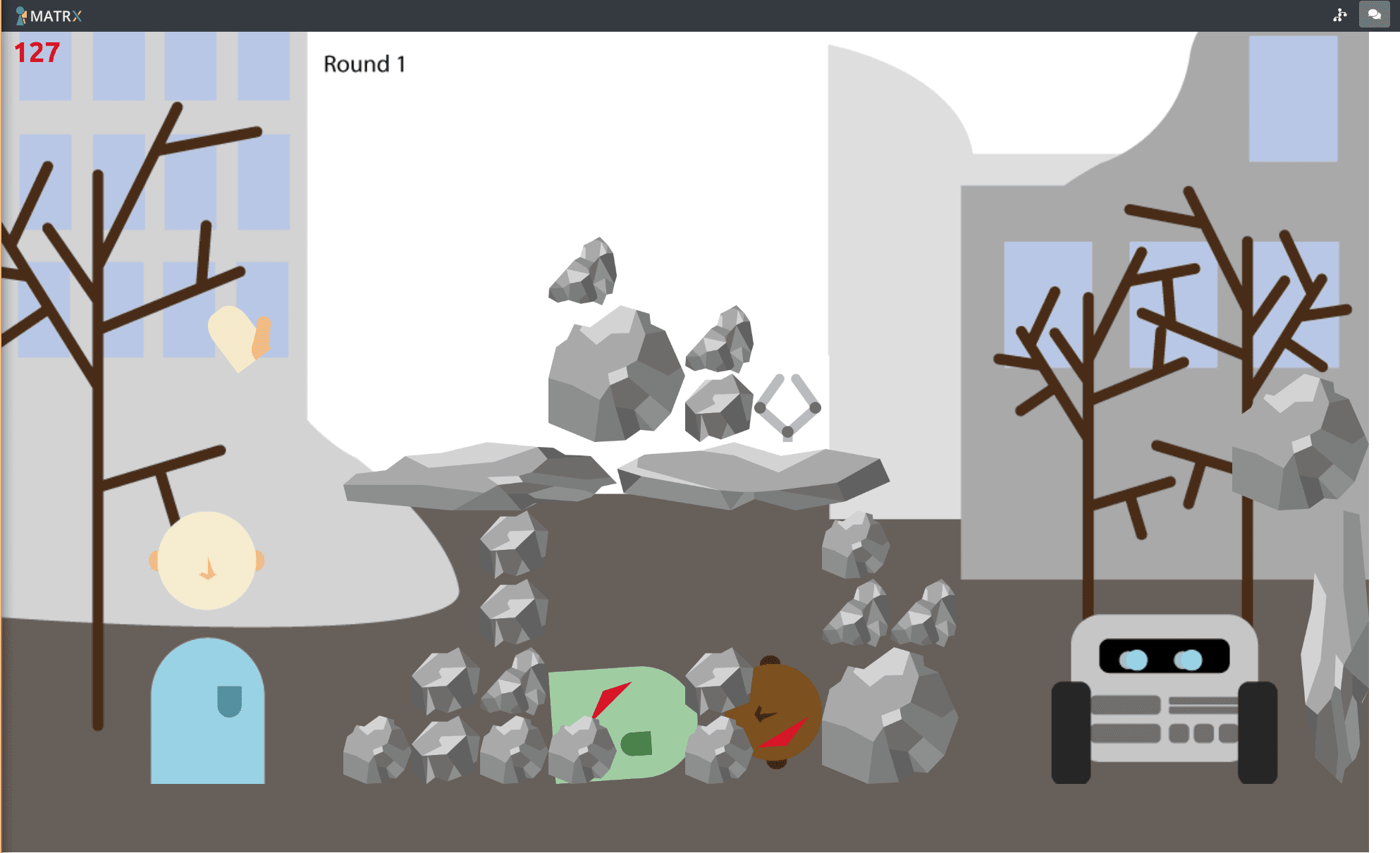
In the MATRX Urban Search and Rescue environment, a human and a collaborative robot work together to rescue a buried victim. People externalize the collaboration patterns they discover during teamwork, and we treat those patterns as explicit knowledge-graph episodic memories. Using graph representation learning, we organize past collaboration patterns and select a representative one to preload into the robot before a new interaction begins. Because the reused experience stays an inspectable situation-action structure rather than opaque policy weights, the robot's later behavior remains auditable.
In a study with 20 participants, initializing the robot with a single prior collaboration pattern raised rescue success from 25.7% to 41.3% and reduced average task time by 283 seconds, with the strongest gains at the very beginning of collaboration.
Why this acceptance matters
For us, this paper extends the memory-centric line of work into human-robot interaction. It shows that explicit, reusable team memory can shape how a robot enters a collaboration, not just how it adapts during one, and that this prior knowledge can stay interpretable rather than hidden inside a learned policy.
It is also a good example of the broader HumemAI direction: explicit memory structures, interpretable decisions, and systems that remain analyzable instead of collapsing experience into opaque hidden state.
Read more
If you want the full technical story, start with the project page and then read the paper on arXiv.
Resources